
How to Measure Social Media Success: The Complete Guide for 2026
Do you ever feel like you are shouting into a big, empty room on social media? You post a photo or a video and wait. You hope people see it. You hope they like it. But most of all, you hope it helps your business grow. It is frustrating when you spend hours making content but have no idea if it works. Without a plan, you are just spinning your wheels. You might be getting likes, but are those likes turning into real dollars?
This guide will show you exactly how to measure social media success. We will move past the fluff and look at the real numbers. By the end, you will know how to run a full data audit for your brand. Ready to see what is actually happening with your marketing? Let’s dive into the data together and make your social media work harder for you.
Why Measuring Social Media Success Matters
If you don't track your numbers, you are flying blind. You wouldn't run a store without checking the cash register, right? Social media is the same. Measuring your results helps you see what people actually enjoy.
When we look at the data, we find the highest ROI online advertising channels for your specific niche. Every post is an experiment. Without measuring, you can't learn from the results. It helps you save time and money by cutting what fails.
Many businesses make the mistake of looking at "vanity metrics." These are numbers like total followers that look good but don't pay the bills. By focusing on real growth, you ensure your business stays healthy and stays ahead of the competition.
Set Clear Goals Before You Measure
You cannot measure success if you don't know what you want. Before clicking any buttons, you need a goal. We like to use the SMART framework. This means your goals are specific, measurable, achievable, relevant, and timely.
Instead of saying "I want to be famous," try saying "I want 50 new leads this month." This gives you a target. It makes the data much easier to read. You will know exactly when you have crossed the finish line.
Always align your social goals with your big business dreams. If you want more sales, focus on clicks to your shop. If you want brand awareness, focus on reach. We help clients align these goals at SimpliFi Chaos.
Key Social Media KPIs to Track
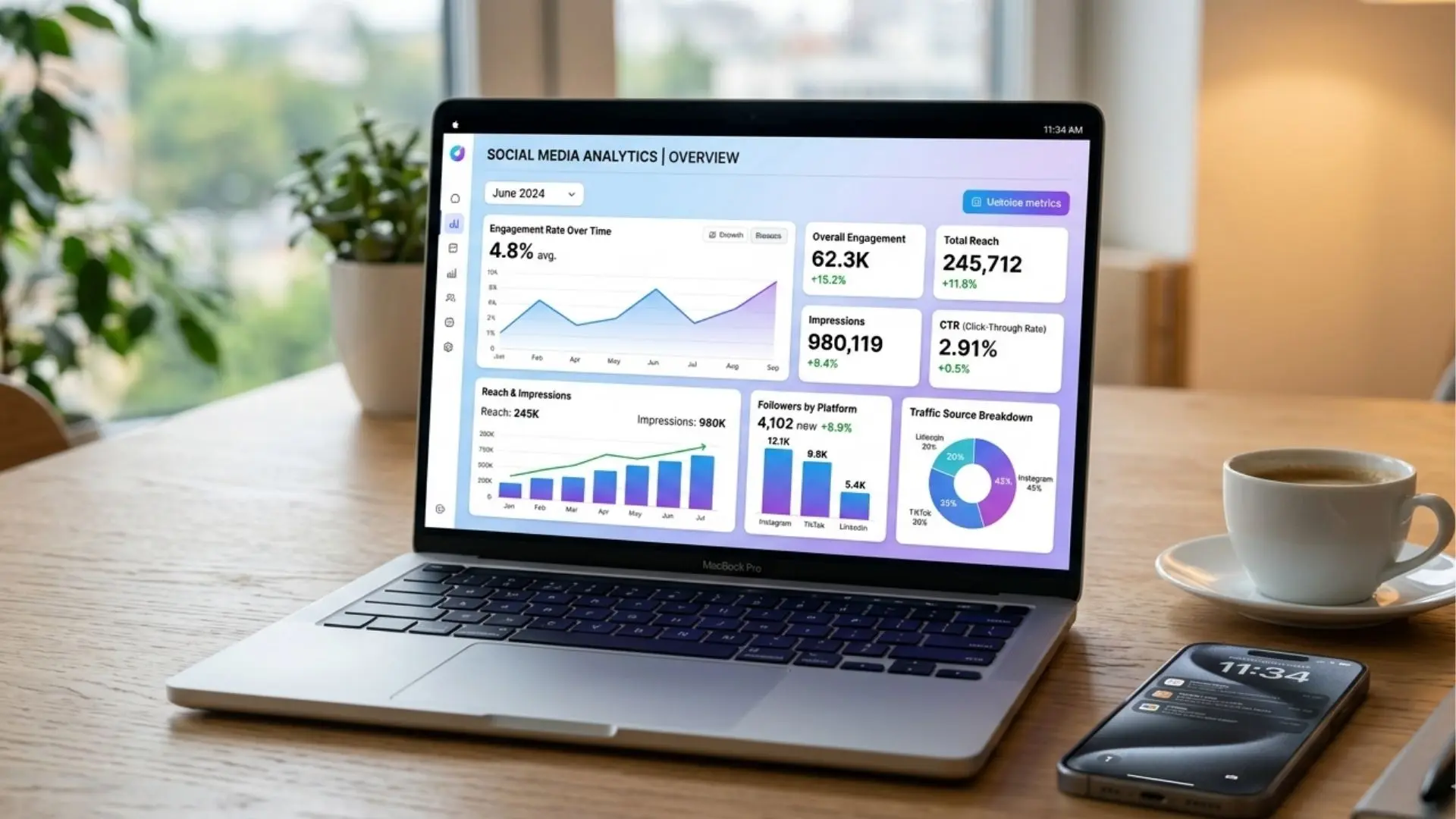
Tracking the right numbers is like having a map. Some numbers tell you if people saw you. Others tell you if they liked you. Here are the most important Key Performance Indicators (KPIs) you should keep an eye on every single week.
Engagement Rate
Engagement rate is one of the most vital signs of a healthy account. It measures how much people interact with what you share. This includes likes, comments, and shares. High engagement usually means your content is helpful or fun for your audience.
According to experts at Georgetown, engagement rate is a favorite metric because it shows true connection. It proves that you aren't just talking to yourself. It shows your followers are actually listening and reacting to your brand's voice.
Reach and Impressions
Reach tells you how many unique people saw your post. Impressions tell you how many times the post was shown on a screen. If your reach is high but engagement is low, your hook might be weak. If impressions are deep, your content is being shown often.
Click-Through Rate (CTR)
CTR is a massive deal for businesses that sell things. It measures how many people clicked a link in your post. This is a bridge between social media and your website. A high CTR means your "Call to Action" is very strong and clear.
Follower Growth
While followers aren't everything, steady growth is a good sign. It means your brand is reaching new corners of the internet. We look for a steady climb rather than a sudden spike. Spikes often come from low-quality bots, but steady growth comes from real fans.
How to Measure Social Media Marketing Performance
Now we get into the "how" of the audit. You need to look at both your free posts and your paid ads. This gives you a full picture of your multi-channel digital advertising efforts. It shows where your money is best spent.
Check Organic Reach: See which free posts got the most attention without any help.
Analyze Paid Ads: Look at your ads to see which ones brought in the cheapest leads.
Use Platform Insights: Every app, like Instagram or LinkedIn, has a built-in data dashboard.
Review Timing: Note which days and times your audience is most active and clicking.
Look at Video Views: See how long people stay to watch your reels or videos.
To get a deeper look, you can follow a social media analytics guide to organize your findings. This helps you group data in a way that makes sense for your monthly reports.
Organic vs Paid Campaign Metrics
Organic posts build trust over time. Paid ads are like fuel for a fire. You need to track them differently to see their value. Organic metrics show brand love. Paid metrics show how well you can scale your message to new people.
Using Platform Analytics Tools
Each social network provides its own set of tools. Meta Business Suite is great for Facebook and Instagram. LinkedIn has its own detailed dashboard. These tools are free and give you a great starting point for your weekly data check-ins.
Using Google Analytics for Social Traffic
Google Analytics is a secret weapon for social media managers. It shows you what people do after they leave social media. Do they buy something? Do they leave right away? This helps you see the real impact of digital marketing on your bottom line.

How to Measure Social Media ROI
ROI stands for Return on Investment. It is the most important part of how to measure social media marketing performance. You want to know that for every dollar you spend, you are making more back in return.
Social Media ROI Formula
The basic way to find ROI is (Earnings - Cost) / Cost. If you spent $100 on ads and made $500, your ROI is high. Tracking this regularly ensures you aren't wasting your budget. It keeps your marketing department profitable and lean.
Cost per Action (CPA)
CPA tells you how much it costs to get one person to do something. This could be signing up for a newsletter or buying a shirt. Lowering your CPA is a primary goal. It means your ads and organic content are becoming more efficient.
Revenue vs Social Media Spend
You must compare your total social spend to your total revenue. This includes the cost of the person making the posts. If you are spending $2,000 a month but only making $1,000 back, something needs to change. Data helps you find that "something."
Best Social Media Analytics Tools in 2026
In 2026, we have amazing tools to help us. You don't have to do everything by hand. Some tools are free, while others cost money but save you hours of work. Choosing the right one depends on your budget and your business size.
For those just starting, the free insights inside the apps are enough. They tell you the basics. But as you grow, you might want a programmatic ad buying guide or a tool that manages multiple platforms at once. This saves you from logging in and out.
We often recommend tools like Sprout Social or Hootsuite for big teams. They let you see all your data in one pretty chart. If you want help picking the right tech, check our FAQs for more advice on marketing tech stacks.
How to Analyze and Adjust Your Strategy
Data is useless if you don't change your behavior. Once a month, sit down with your numbers. Look for patterns. Did your videos do better than your photos? Did people click more on Tuesdays? Use these clues to plan next month.
Compare yourself to others in your industry. This is called competitive benchmarking. If your rivals are getting more comments, see what they are doing differently. Don't copy them, but learn from their success and their obvious mistakes.
Regular reviews keep your strategy fresh. The digital world moves fast. What worked in January might fail in June. By tracking social media ROI closely, you can pivot before you lose money. Stay flexible and always trust the hard numbers.
Final Thoughts
Measuring social media success doesn't have to be scary. It is just about being honest with your numbers. When you know what works, you can do more of it. You will feel more in control of your brand's future. Start small, track your KPIs, and watch your business thrive.
Ready to scale your brand with expert help? Visit SimpliFi Chaos to master your digital strategy.
FAQs
How do you measure social media success?
You measure success by checking if you met your SMART goals. This includes looking at engagement rates, website clicks, and actual sales generated. Use platform tools and Google Analytics to track how users move from your social posts to your checkout page.
What are the most important social media KPIs?
The top KPIs are engagement rate, reach, click-through rate (CTR), and conversion rate. Engagement shows how much people like your content. CTR and conversion rate show if your social media is actually helping you sell your products or services.
How do you calculate social media ROI?
To calculate ROI, take your total profit from social media and subtract your total costs (ads, software, and labor). Divide that number by your total costs. Multiply by 100 to get a percentage. A positive percentage means your social media is making money.
How often should I perform a social media audit?
You should do a mini-audit every month and a deep-dive audit every quarter. Monthly checks help you fix small problems fast. Quarterly audits allow you to see big trends and adjust your overall business strategy for the coming months.
Can I measure social media success for free?
Yes, you can use free tools like Instagram Insights, Facebook Analytics, and Google Analytics. These provide enough data for most small to medium businesses. You only need paid tools if you are managing many accounts or need very advanced reporting features.


