
What Is Lead Generation? Everything You Need to Know
What is lead generation? At its core, it is the process of attracting strangers, turning their curiosity into contact information, and guiding them toward becoming paying customers. Every business, from a solo freelancer to a national brand, depends on some version of this process to keep new customers coming in the door.
Yet most people who search for this term are not looking for a dictionary definition. They want to understand how the process actually works, which strategies produce real results, and how to tell a genuinely qualified lead from someone who will never buy.
This guide breaks down the entire lead generation process step by step, compares inbound and outbound approaches, walks through proven strategies, and explains how a lead nurturing funnel turns cold interest into closed revenue
What Is Lead Generation, Exactly?
In simple terms, lead generation is the process of attracting and converting strangers into prospects who have shown interest in a company's product or service, typically by capturing their contact information. A 'lead' is simply a person or business that has raised their hand in some way, by filling out a form, downloading a resource, or requesting a quote.
This is different from simply getting traffic to a website. Traffic is anonymous. A lead is a named, reachable person your team can follow up with directly. That single distinction is why lead generation sits at the center of almost every modern marketing strategy.
Businesses invest in lead generation because it creates a repeatable, measurable bridge between marketing activity and actual sales conversations, instead of hoping the right person notices an ad or a post at the right moment.

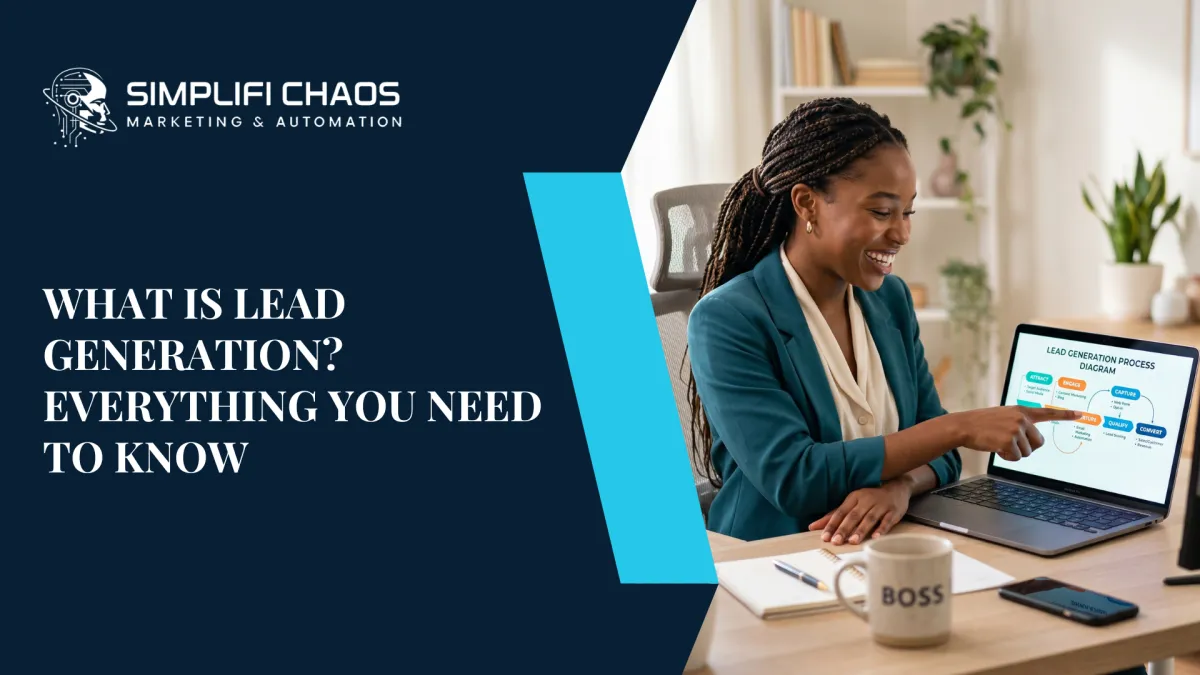
How the Lead Generation Process Works
The lead generation process usually follows a consistent sequence, regardless of the industry or channel being used. Understanding each stage makes it much easier to diagnose where a business is losing potential customers.
1. Attract
A business first needs to get in front of the right audience, whether through content, ads, search rankings, or social media. This stage is about visibility to people who match the ideal customer profile.
2. Capture
Once attention is earned, the business needs a way to capture contact details, usually through a landing page, form, quiz, or gated resource offered in exchange for an email address or phone number.
3. Qualify
Not every captured contact is a real opportunity. Qualification separates genuine prospects from casual browsers using criteria like budget, timeline, and fit with the product or service.
4. Nurture and Convert
Qualified leads rarely buy on the first interaction. A nurture sequence, usually email or SMS, keeps the relationship warm until the prospect is ready for a sales conversation and, eventually, a purchase.
Inbound vs Outbound Leads: What Is the Difference?
The two main types of lead generation are inbound lead generation and outbound lead generation, and most effective strategies blend both rather than relying on just one.
Inbound lead generation pulls prospects toward the business through content, SEO, and social media. A blog post that ranks on Google, a helpful YouTube video, or a valuable lead magnet all count as inbound. These leads tend to be more educated and self-selected by the time they reach out, which often makes them easier to convert.
Outbound lead generation pushes the business toward the prospect through cold email, cold calling, and paid ads. It is faster to launch than inbound and gives a business direct control over who gets contacted, but it typically requires more volume to find the same number of qualified conversations.
● Inbound leads: blog content, SEO pages, organic social, lead magnets, webinars
● Outbound leads: cold email, cold calling, LinkedIn outreach, paid advertising
Neither approach is inherently better. Inbound builds a compounding asset over time, while outbound delivers speed and predictability while that asset is still being built.
Proven Lead Generation Strategies That Actually Work
A strong lead generation strategy for small businesses combines a clear lead magnet, an optimized landing page, and a follow-up email sequence to nurture prospects toward conversion. The following approaches consistently produce results across industries:
● Offer a specific lead magnet, such as a checklist, template, or short guide, instead of a generic 'newsletter signup'
● Build a dedicated landing page for every offer, rather than sending traffic to a general homepage
● Layer retargeting ads on top of website visitors who did not convert the first time
● Use SEO-optimized blog content to capture prospects who are actively searching for a solution
● Automate a follow-up sequence so no captured lead goes more than a day without contact
The businesses that struggle with lead generation are rarely missing a channel. They are usually missing the connective tissue, the landing page, the follow-up, the offer, that turns attention into an actual conversation.

What Makes a Lead a Qualified Lead?
Not all leads carry equal value, which is why the concept of a qualified lead matters so much. A qualified lead is a prospect who has been vetted against specific criteria and shown to be a realistic buyer, not just someone who clicked a button out of curiosity.
Common qualification criteria include budget, decision-making authority, a clear need for the product or service, and a realistic timeline to purchase. Many teams use frameworks like BANT (Budget, Authority, Need, Timeline) or lead scoring models that assign points based on behavior and demographics.
Chasing volume without qualification is one of the most common lead generation mistakes. A smaller number of well-qualified leads will almost always outperform a large list of unqualified contacts, both in conversion rate and in the time sales teams spend per closed deal.
Building a Lead Nurturing Funnel That Converts
A lead nurturing funnel is the system that carries a prospect from first contact to closed customer, and it is where most of the real conversion work happens. Very few leads are ready to buy the moment they hand over their contact information.
A well-built funnel typically starts with an immediate welcome message, followed by a short series of emails or texts that build trust, answer common objections, and showcase proof like testimonials or case studies. Each touchpoint should move the prospect one step closer to a sales conversation.
Segmentation makes nurturing far more effective. A lead who downloaded a pricing guide is ready for a different message than one who just read a blog post, and treating them the same way wastes the opportunity created by that first interaction.
Lead Generation vs Sales: Where Does One End and the Other Begin?
Lead generation identifies and attracts potential customers, while sales focuses on converting those qualified leads into paying customers. Confusing the two is a common reason businesses feel like their marketing 'isn't working' when the real gap is actually in follow-up or closing.
Marketing generally owns the top of the funnel, attraction and capture, while sales owns the bottom, the direct conversation that turns a qualified lead into revenue. The handoff between the two, and how quickly and clearly it happens, is often the single biggest factor in overall conversion rate.
Who Needs Lead Generation?
Any business that relies on new customers to grow needs some form of lead generation, but the right mix of strategies depends heavily on sales cycle length and average deal size. A local service business might rely mostly on paid ads and a simple contact form, while a B2B company selling a complex solution may need a longer nurture sequence and outbound outreach to fill its pipeline.
Budget also plays a role in shaping the right approach. Businesses with a smaller marketing budget often start with organic content and a single lead magnet, then reinvest early wins into paid channels once they know which offer actually converts. Larger businesses can usually afford to run inbound and outbound in parallel from day one, testing both to see which produces a lower cost per qualified lead.
Common Lead Generation Mistakes to Avoid
Even a well-designed strategy can underperform if a few common mistakes creep into the process. Recognizing these early saves both budget and time.
● Sending traffic to a homepage instead of a dedicated, offer-specific landing page
● Waiting hours or days to follow up with a new lead, when speed to contact is one of the strongest predictors of conversion
● Treating every lead the same instead of segmenting by interest, source, or buying stage
● Measuring success by raw lead volume instead of qualified lead volume and cost per acquisition
● Running paid ads without a clear tracking setup, making it impossible to know which channel actually produced results
Most of these mistakes come down to the same root cause: treating lead generation as a single campaign instead of an ongoing system that needs monitoring, testing, and refinement over time.
Frequently Asked Questions (FAQ)
1. What is lead generation in simple terms?
Lead generation is the process of attracting and converting strangers into prospects who have shown interest in a company's product or service, typically by capturing their contact information.
2. What are the main types of lead generation?
The two main types are inbound lead generation, which uses content, SEO, and social media, and outbound lead generation, which relies on cold email, cold calling, and paid ads.
3. What is a good lead generation strategy for small businesses?
A strong strategy combines a clear lead magnet, an optimized landing page, and a follow-up email sequence to nurture prospects toward conversion.
4. How is lead generation different from sales?
Lead generation identifies and attracts potential customers, while sales focuses on converting those qualified leads into paying customers.
Conclusion
So, what is lead generation, really? It is the structured process of attracting attention, capturing contact information, qualifying real opportunities, and nurturing them until they are ready to buy. Every stage matters, and skipping any one of them is usually where businesses lose the most potential revenue.
Whether a business leans more heavily on inbound content, outbound outreach, or a blend of both, the fundamentals stay the same: attract the right people, qualify them honestly, and follow up consistently until they convert.
Want a done-for-you system built around this exact process?


